
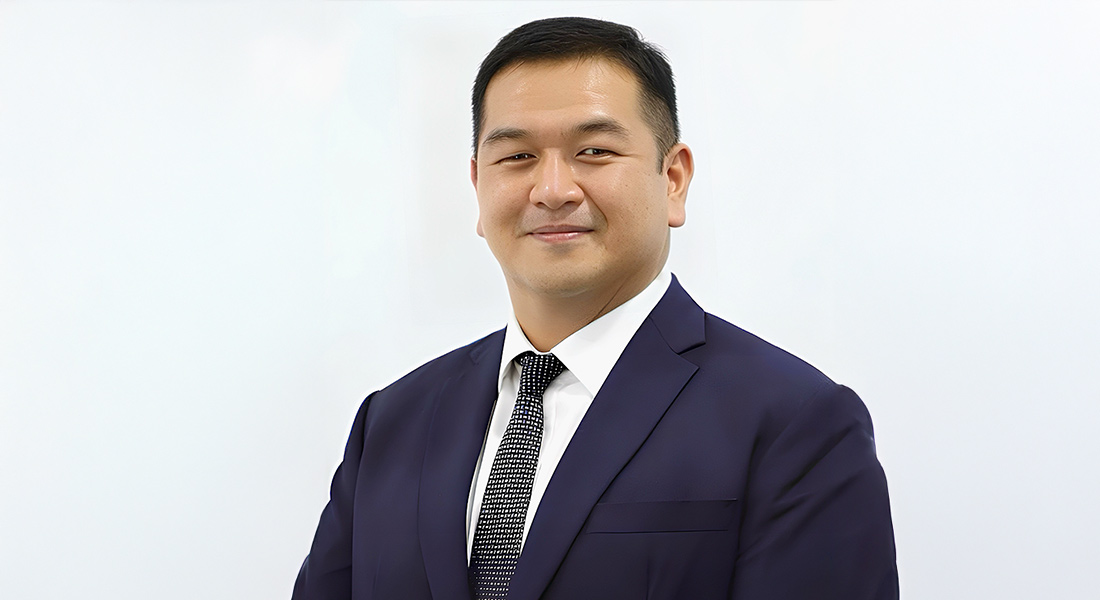
08 Dec Interview with Mohd Fazilah Yassin, COO, Muara Port Company (MPC), Brunei
What factors make Brunei an attractive global logistics base?
Brunei’s key advantage is its small and nimble economy supported by a stable and business-friendly government. While our market size is limited, we provide a unique opportunity for investors looking to enter the Association of Southeast Asian Nations region — especially those from the USA and Europe. Traditionally, companies have established regional offices in Singapore or Hong Kong. However, Brunei has the potential to serve as a strategic entry point for businesses exploring opportunities in this part of the world. Brunei is small and many are unaware of its location; with increased coverage, we hope to raise awareness about what Brunei offers, spark curiosity and attract future investments and collaborations. After the COVID-19 pandemic, Brunei took longer to stabilize and realign its business strategies than neighboring countries. The growth of our gross domestic product remains modest, driven mainly by oil and gas, with limited contributions from sectors such as manufacturing and tourism. The government’s Vision 2035 remains critical as a blueprint to diversify the economy. The focus is now on collective efforts to achieve these goals.
Can you provide an overview of the Muara Port expansion project’s scope and timeline?
We developed a long-term master plan to guide Muara Port’s growth over the next 20-30 years. This involved extensive consultations with government agencies and industry players to understand their development plans and ensure the port meets future needs. One key recommendation is to expand the port as its current capacity does not support the projected increase in cargo from various sectors. We officiated the project in September 2024 and are finalizing its detailed design. Construction is set to begin in the second quarter of 2025, with completion expected by mid-2027. Once construction starts, we will move full speed ahead to finish within 30-36 months. The expansion is primarily self-funded, as advised by our board. We have also involved banks to share the opportunity and benefit from the project. We are actively promoting the terminal to attract future investors.
Initially, the expansion was planned for a later date. However, given the current situation, we decided to expedite it. This was done to ensure we are ready when businesses execute their plans and to provide confidence in Brunei from potential investors. A clear and actionable expansion timeline is crucial for attracting investment; it demonstrates our commitment to meeting future demands. Our strategy focuses on proactive engagement. We are identifying and inviting potential investors and working closely with the Brunei Economic Development Board (BEDB) to promote Brunei as a logistics hub. A key feature of the expansion is a port trade zone similar to a free trade zone but located within the port itself. Unlike other countries where these zones are near but not inside the port, we have reserved a small plot directly behind the terminal. Our focus is on attracting food processing investors. The idea is simple; raw materials arrive at the port, are processed nearby and exported directly from the terminal. This model streamlines logistics and enhances efficiency. This will act as a pilot project to demonstrate this model’s success to the nation. If it works, it could be scaled up and implemented on other industrial lands across the country.
What efforts have been made in the past five years to enhance connectivity in Brunei with major markets?
A critical step in our connectivity strategy was establishing a direct shipping route from Brunei to southern China. This new route shortens lead times for imports from China where most cargo originates. Relying solely on traditional routes limits our growth; establishing this connection is essential in fostering our economic development. As cargo volumes increase, logistics costs will decrease, making Brunei a more competitive hub. With this direct link in place, we can now attract more businesses. Another key strategy is to leverage Brunei’s position within the Brunei Darussalam–Indonesia–Malaysia–Philippines East ASEAN Growth Area. Brunei is strategically located as a central hub for regional trade, and a perfect link to connect these markets with China. We launched the Muara-Qinzhou shipping route in 2023, connecting directly to our shareholder’s Port of Beibu Gulf in Guangxi, southern China. The port is a mandated hub for goods in the region and provides seamless connectivity to Europe via rail in just two weeks. Our goal is to attract cargo from businesses with operations in China and facilitate the movement of raw materials and exports through Muara Port. While volumes are currently low, we are actively promoting this route and expect growth. For time-sensitive goods like perishables, faster shipping is crucial. We currently operate monthly shipments and plan to increase the frequency of shipments to biweekly and eventually weekly as demand grows.
What impact has digitization had on improving efficiencies at Muara Port?
When Muara Port Company (MPC) was established, our priority was to implement a terminal operating system to boost efficiency, which was previously low. This system has been the key to our success and has allowed us to operate more efficiently than neighboring ports, a fact recognized by our clients. As a small and agile port, we adapt quickly. Our system provides real-time performance monitoring, which has aided us in running smooth operations. We have shifted focus to streamlining documentation through electronic data interchange (EDI), which enables seamless document exchange. We have successfully tested EDI with two major shipping lines and plan to roll it out to all clients soon. I recently returned from Kuala Lumpur, where I attended a session with authorities discussing the maritime single window — a centralized digital portal required by the International Maritime Organization for all member states. Brunei is working towards implementing it. Once our EDI system is fully operational, we will integrate with the maritime single window to meet government digitalization goals. The authority aims to complete this by April 2025. While we are making progress, there exists concern whether clients are ready to adapt. Many have their own systems, and it will take time to align everyone. However, these steps are essential for achieving Brunei’s 2035 vision.
What initiatives has Muara Port undertaken to adopt sustainable practices?
Brunei is still early in its green initiatives, which are led for the most part by the prime minister’s office’s Green Protocol. We have been focused on sustainability since we started operating the port. For instance, all our cranes are electric, eliminating diesel consumption and our carbon footprint. Only some ground fleet vehicles still utilize diesel, and we minimize engine idling with strict standard operating procedures. We will purchase electric cranes and state-of-the-art equipment for the new terminal. While some neighboring ports are converting to electric equipment, we have been using electric machinery from the start. We also converted our terminal to LED lights three years ago. These are just a few of the many steps we are taking to support green initiatives and comply with the government’s goals.
Can you outline MPC’s current mandate and responsibilities in 2024?
Our main objective is to drive economic development by acting as a catalyst for the country. This will be done not only through the port expansion but also by supporting the government in attracting investors and facilitating investment opportunities. For example, some Chinese companies reached out to us for insights. After discussing opportunities and overcoming concerns, we helped build their confidence, and they are now engaging with the government and investing in Brunei. This approach applies to other countries as well, not just China. During my recent visit to Johor, I met with a Dubai operator interested in exploring opportunities in Brunei. We showcased what we offer as a port and highlighted Brunei’s overall potential, particularly in auto manufacturing and environmentally friendly practices. Another recent foreign direct investment we helped facilitate is with an aluminum processing company that processes raw materials and plans to export globally in its next phase. Two years ago, we also supported Brunei’s largest investment in the fertilizer industry, with 99% local funding. Brunei Fertilizer Industries invested nearly $2 billion to build a plant, and since then urea has become Brunei’s second-largest export. We are on track to export 700,000 tons in 2024 and expect to grow this number next year. The success of this project has proven the viability of the investment and demonstrated our ability to facilitate large-scale operations. We go the extra mile to offer services and solutions to ensure seamless operations for foreign direct investments and help them thrive in Brunei.
What are your top three priorities as COO of MPC as we move towards 2025?
My top priority is ensuring the company operates smoothly and safely with no accidents or fatalities. We have been successful in maintaining high efficiency. Another key focus is increasing local involvement, not just in the port but across the logistics value chain. When we started in 2017, we had 140 employees and we now have 260, with 96% of them being locals. Initially, we relied on foreign expertise for crane and equipment operations, but we have since transferred that knowledge to locals. Today, all operations are run by local staff. For example, our health safety security and environment department and engineering department are now headed by locals, which took years of training and upskilling. As we plan to double the port’s size, we are preparing to recruit and train more local employees. We will begin recruitment in 2026 to ensure our current team is ready to transition into operating the new terminal.
With 18 years in the industry and having worked in this area since 2006, I’m passionate about transforming and expanding Brunei’s port sector. Over the years, our company has been mentioned in His Majesty’s speeches, including the establishment of the company in 2017, our projects with Brunei Fertilizer Industries, the launch of the shipping line and now the port expansion. Being recognized by His Majesty is an honor, but it also brings pressure to meet his expectations. We must continue to contribute, especially to the shipping line’s growth. While the port industry may seem small, we recognize its importance to Brunei’s economy.
Sorry, the comment form is closed at this time.