
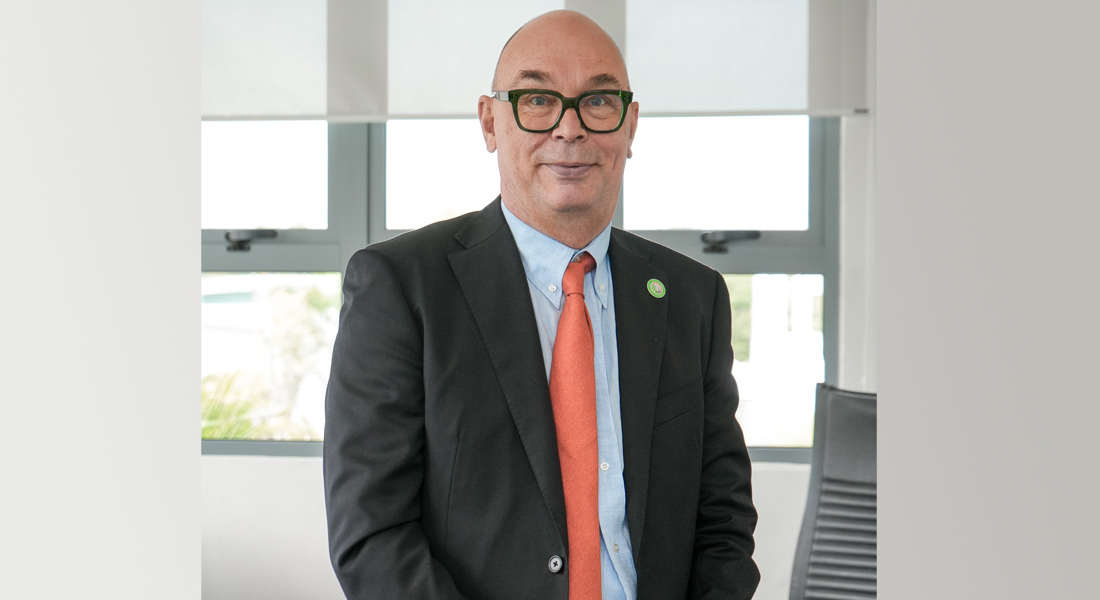
07 Dec Interview with Harri Kiiski, CEO, Brunei Fertilizer Industries (BFI)
Why is Brunei a prime location for a prosperous downstream oil and gas industry?
Brunei is strategically located at the center of a growing market. To its west is Africa, and to its east is the Americas. Countries in the Association of Southeast Asian Nations such as Singapore, Malaysia, Thailand and others represent a thriving regional market for Brunei Fertilizer Industries (BFI). About 50% of our production serves Southeast Asia, with another 20-25% going to Oceania and the same to the western coast of the Americas. Additionally, Brunei’s proximity to major gas producers such as Brunei Shell Petroleum Company offers significant opportunities, and the presence of Brunei Methanol Company and other emerging petrochemical companies in the region creates potential synergies for future growth. Brunei may be small, but it offers a wealth of opportunities, including a burgeoning electric car sector. It is easier to develop similar technologies here than in larger countries. Brunei is also well-connected, with Royal Brunei flying to many Asian destinations within a 2- to 3-hour range.
Can you provide an overview of BFI’s scope of operations in 2024 and its major milestones as a frontrunner for Brunei’s downstream production?
We are a young company; our plant construction began in 2017, and commissioning began in 2019. Despite the challenges of COVID-19, we completed the commissioning phase by the end of 2022 and started commercial production in 2023, producing 914,000 tons of urea fertilizer. In 2024, we are on track to produce 1.1 million tons. Our nameplate granular urea capacity is 1.37 million tons per year, and we plan to reach that gradually. Since 2023, we have engaged with our main customers to understand their needs and make necessary adjustments to our production line. We are now recognized as a high-quality producer in the region and have a steady customer base. We are producing at capacity and have demand for more than our current output.
What steps has the company taken to expand its global customer base?
Partnerships are crucial for us. Unlike large fertilizer companies with multiple production sites, we are a single-site operation. We rely on partnerships with international producers such as Pupuk Indonesia and others from Europe and the USA. Southeast Asia lacks a fertilizer industry association like those in Europe and the USA, making collaboration with companies like Pupuk Indonesia and Petronas even more important. Customers are our priority. I am proud Brunei Fertilizer Industries was behind the first-ever transactions between Brunei and Chile and Peru. His Majesty — the longest-reigning monarch — is also a respected leader in the Association of Southeast Asian Nations community, amplifying Brunei’s global presence beyond its size.
What measures is BFI taking to ensure a low carbon footprint and circular activities in its production and exports?
The world is at a crossroads in terms of sustainability. It will be interesting to see what happens after January, especially with emerging activities that may conflict with sustainability goals. The fertilizer industry is one of the hardest to decarbonize. It is based on the Haber-Bosch process invented in 1912 that enabled the world to support more than 8 billion people. Without fertilizer, the global population would be only 3 billion to 4 billion. As a hydrogen-based industry, we extract hydrogen from natural gas, combine it with nitrogen from the air and produce ammonia. The carbon from natural gas forms carbon dioxide and reacts with ammonia to create urea, integrating a large portion of carbon dioxide into the urea molecule. However, the carbon dioxide released during application poses a sustainability challenge.
We are exploring several avenues to reduce our environmental impact. One is carbon capture technology that reduces carbon dioxide emissions from flue gas by storing it. Carbon capture activities leverage Brunei’s long history of oil and gas extraction. For Scope 2 emissions, we are working on high-capacity land transport to reduce our carbon footprint by 30% by shipping two containers instead of one. We are also aiming to utilize existing empty containers exiting Brunei, which would further cut emissions. For Scope 3 emissions, we are adding additives to our urea products such as micronutrients like zinc, bio-stimulants and inhibitors. These will help reduce greenhouse gas emissions in agriculture. For example, adding zinc to soil in Southeast Asia improved crop yield and nutrition. Bio-stimulants enhance nutrient efficiency by promoting deeper root growth, while inhibitors reduce nitrous oxide emissions from soil bacteria and help decrease greenhouse gases. In rice cultivation, 20-50% of nitrogen from urea is lost to the environment. By using inhibitor-coated urea, we can improve this significantly. If all our products were converted, we could reduce carbon emissions in agriculture by 2.3 million tons. Success depends on our customers. However, many in this region lack the necessary education and knowledge. While it may be a long journey, we are committed to providing this opportunity, educating them on best practices and supporting them despite not directly engaging with end customers.
How advanced tools is BFI utilizing as part of its ongoing digitization strategy?
Digitalization is our next step. We have built a world-class ammonia-urea plant based on best practices using advanced process controls and digital twin technology to optimize production. This increases output by 1-2% while reducing carbon dioxide emissions and improving energy efficiency. Full digitalization will take 5-10 years; we are starting with the basics. Southeast Asian farmers are not as advanced as their European or American counterparts that have satellite connections and predictive tools. While we lack full downstream integration with farmers, we are still committed to improving processes.
What initiatives is the company implementing to overcome workforce challenges and nurture the next generation of industry leaders?
BFI is a pioneer in local employment. We hired 160 young Bruneians directly from universities and technical institutions, which now make up 30% of our workforce and run the plant. It has been a gradual process; initially, expats led operations but now Bruneians are taking charge. Brunei’s education system is strong, with many having studied abroad. However, the challenge is applying this knowledge in the workplace. At BFI, our young employees have not been influenced by long-standing practices, which has been helpful. We have built a strong safety culture. We view mistakes as valuable learning opportunities but stress the importance of avoiding repeated errors. While some Bruneians were initially hesitant, they have gained confidence and responsibility over time, demonstrating the importance of encouragement to take the next step.
Our workforce is diverse, with 14 nationalities. We are deeply committed to diversity, with women comprising 50% of our management team and 22% of our total workforce. Our core values are respect, engagement, excellence and integrity. We have built our own culture, the BFI WOW or Way of Working, which incorporates knowledge from our international team. We have achieved 2.2 million work hours without any lost-time injuries, a great accomplishment for a company of our age. During commissioning, we achieved 22 million work hours with only four incidents. This is a strong safety record compared to the industry average of four accidents per million hours. So far we have had 16 months without any accidents. In Brunei, safety culture is deeply embedded in our ethos, especially in the oil and gas industry.
What are your top priorities as CEO of BFI as we enter 2025?
I aim to use my 40 years in the fertilizer industry to bring best practices to Brunei. When I started, the industry averaged 30 accidents per million working hours and in my previous roles, we struggled to reduce it to just one. We are currently close to zero and continue to prioritize safety. Sustainability is another major focus. With Singapore planning to convert to ammonia-based energy, we have the potential to supply green or blue ammonia. Brunei’s proximity to Singapore gives us an advantage. His Majesty’s speeches on decarbonization and green initiatives show strong local support. However, green ammonia remains costly, which could drive up food prices. We must prepare cost-effective solutions as technology advances. We are also exploring synergies within the industrial park to create jobs and opportunities for small and medium-sized enterprises.
Sorry, the comment form is closed at this time.