
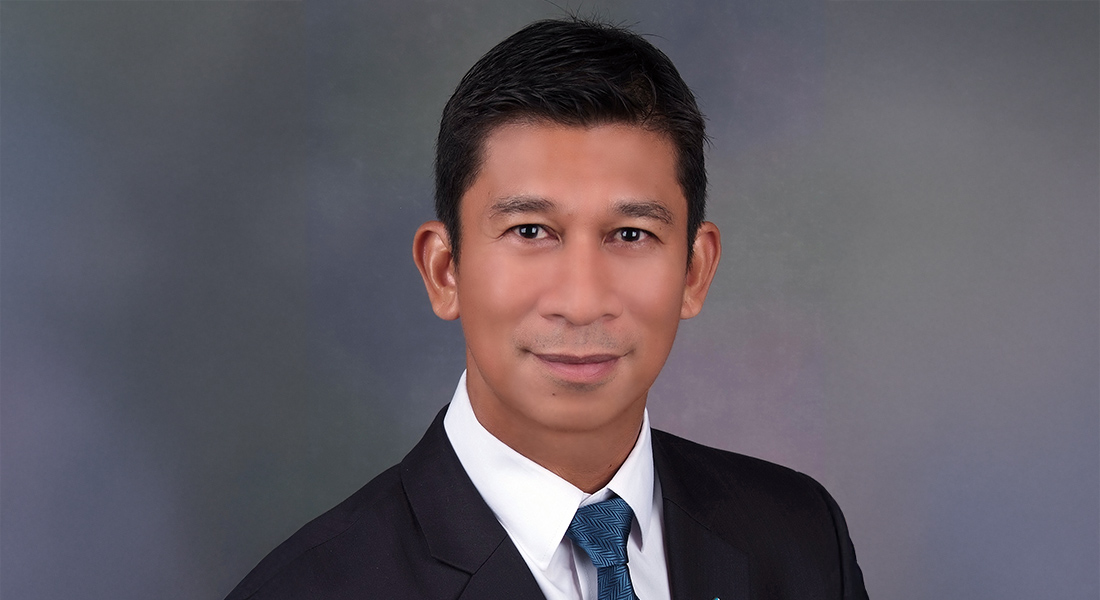
12 Dec Interview with Pengiran Aki Ismasufian bin Pengiran Haji Ibrahim, CEO, Standard Chartered Bank Brunei
How is Standard Chartered Bank Brunei contributing to the development of Brunei’s financial sector?
The banking and finance sector is a key driver of Brunei’s economic development and an active supporter of government initiatives. While diversification efforts began more than a decade ago, progress has been gradual. However, there is growing momentum to accelerate these efforts and make Brunei’s economy more dynamic. The financial services sector remains strong, with solid capital-to-yield ratios and robust liquidity. Banks are eager to back diversification projects and collaborate closely with the government and private sector across various industries. Sustainability is also shaping the future of banking in Brunei, with a growing focus on transition and sustainable finance in line with global trends.
Standard Chartered plays a key role as Brunei’s longest-standing bank, with 66 years of history and a commitment to many more. We offer comprehensive financial services to individuals and corporations and actively support the economy’s ongoing progress. As a global bank, we bring international standards in terms of compliance, risk management and expertise. Our unique network spans all 10 Association of Southeast Asian Nations (ASEAN) countries, making us the only major international bank with this presence. This represents a significant advantage for foreign investors and US companies seeking to leverage ASEAN’s rapid economic growth and growing foreign direct investment. Our focus is being the best cross-border network bank for affluent clients and aligning with global strategies to connect ASEAN nations, Europe, Asia and the Americas.
Moving forward, Standard Chartered Brunei will remain open for business by leveraging our strengths, particularly in digital banking and wealth management. We focus on wealth management to help our customers build for the future through investment opportunities. As a market leader in wealth management in Brunei, we provide around 270 investment products, including unit trusts, bonds and leveraged financing. While we pursue growth, we also prioritize effective cost management. Standard Chartered remains deeply committed to supporting Brunei’s economic diversification; we prioritize collaboration with the business community and government agencies to help achieve the nation’s economic goals alongside our business operations.
What technologies has the bank recently adopted under its digitization agenda?
Digital banking has been well-received as consumers adapt to more convenient, fingertip-access services. Gone are the days of long lines and paperwork; banking is now faster and more accessible. Artificial intelligence plays a key role in our digital journey, with advanced features integrated across platforms. We have launched fully digital banking arms in markets like Hong Kong and Singapore; this is a key business segment for the bank. As we accelerate digital transformation, we remain vigilant about cybersecurity and fraud by continuously enhancing systems to ensure safe and seamless services for our clients. We are introducing a new live chat feature for corporate online banking, which has already been launched in other markets. This allows customers to get instant support from our call center while managing transactions, such as checking payment statuses, without requiring a phone call. By automating these interactions, we aim to streamline services and free up time for more meaningful tasks.
We have been recognized as the Best Digital Bank for 10 years, which reflects our commitment to digital transformation. Our enhanced online banking services offer seamless and user-friendly experiences for both retail and corporate customers. A key feature is account connectivity across borders. For instance, customers with accounts in Brunei and Singapore can easily manage finances via smartphones. This is a vital tool for international investors. We have streamlined operations, reshaped our physical touchpoints and aligned with modern banking trends, with new banking channels reducing the need for physical branches.
What efforts is Standard Chartered Bank Brunei making to upskill the workforce?
Talent development is a key focus at Standard Chartered Brunei. We run various initiatives to identify and nurture talent and offer physical and e-learning programs. Mandatory e-learning courses ensure staff continually enhance their skills to stay competitive. Retaining talent in Brunei can be challenging due to our small population. To overcome this we prioritize upskilling, including soft skills and skills related to specialized areas such as digitization. We also provide opportunities for cross-border assignments, with staff currently working in larger markets such as Singapore, China, Japan and Vietnam. These exchanges, particularly within ASEAN nations, broaden our workforce’s experience and motivate our team.
What is the bank doing to promote sustainable finance and protect the environment?
Standard Chartered strives to be a responsible business through our net zero targets, environmental and social risk management, transparency and investment in our people. We are guided by our values, which are “Never settle,” “Better together” and “Do the right thing.” Our financial literacy programs and community engagement uplift local communities, and our diversity and inclusion initiatives foster equitable opportunities within businesses. Aligned with Brunei’s Vision 2035, we actively support sustainable and low-carbon projects, invest in talent development to build a highly skilled workforce and advance digital transformation. Additionally, we collaborate with local organizations on education, health and sustainability initiatives, which reflects our commitment to environmental, social and governance principles and sustainability.
What opportunities currently exist for foreign investors looking to participate in the Bruneian market in 2024?
We are aligned with the government’s vision and are focused on key sectors such as downstream oil and gas, food, tourism and services. While diversifying away from oil and gas is vital, these sectors remain strong, especially in the renewables sector and along the energy value chain. Brunei also holds significant potential in aquaculture, agriculture and farming. Investors have shown interest in leveraging Brunei’s clean water and other comparative advantages for salmon breeding and research and development. These sectors present promising opportunities for growth and investment.
We play a strategic role in attracting foreign direct investment to Brunei through our global network and strong relationships with multinational clients. Our initiatives focus on supporting companies looking to expand globally by offering financial services such as multi-currency accounts, trade finance, digitalization training and robust compliance and risk management. We work closely with the Brunei Economic Development Board to promote the country abroad and support potential investors. When opportunities arise, we collaborate with the Brunei Economic Development Board to provide the necessary financial services and expertise to facilitate investment in the country.
How has your involvement with APEC Business Advisory Council influenced your work at Standard Chartered Bank Brunei?
Under the APEC Business Advisory Council, several key workstreams align with Standard Chartered’s contributions. One focus is digital transformation, particularly in digital trade and paperless trade. Sustainability is another priority, including voluntary carbon markets and the potential for ASEAN nations to participate in carbon trading. Brunei could lead in this category, especially in carbon capture. Standard Chartered can support this by sharing expertise from other markets with the local government and investors. Human capital development is also critical. While Brunei produces many graduates, there is a gap in aligning skills with job market needs. APEC economies are exploring how to better match education with future job requirements, particularly in sectors like energy. Brunei is set to launch its National Digital Payment Hub soon, a collaboration between the banking sector and the government. Transactions are currently limited to interbank flows and consumers cannot easily transfer funds across accounts. After extensive pilot testing, the hub will roll out in two phases. Phase one — which will be launched in the next few months — will enable smoother domestic transactions. Phase two will introduce cross-border payments to revolutionize banking with real-time and fast transactions.
Sorry, the comment form is closed at this time.